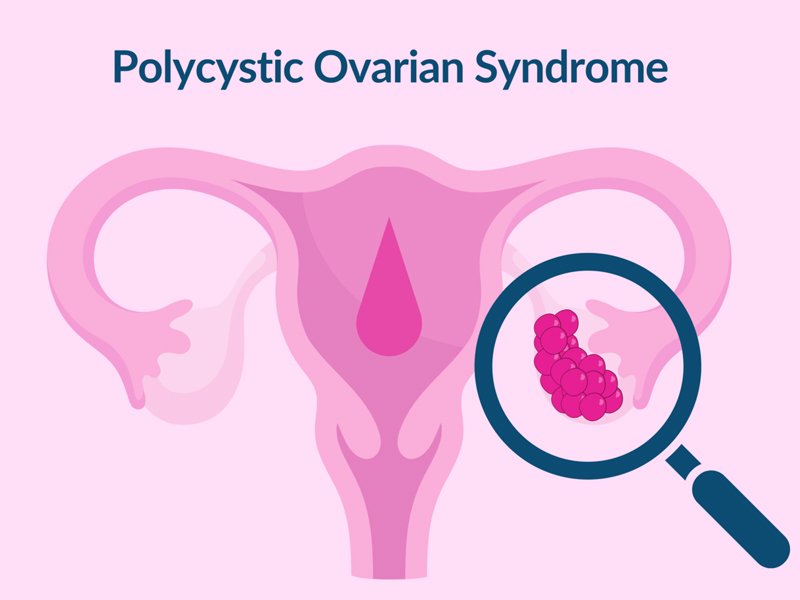
Polycystic Ovarian Syndrome (PCOS)
What is PCOS?
Polycystic Ovarian Syndrome (PCOS) is a common hormonal disorder that affects women of reproductive age. It is characterized by irregular periods, elevated levels of male hormones (androgens), and the presence of small fluid-filled sacs (cysts) on the ovaries. PCOS can affect a woman’s menstrual cycle, fertility, hormones, insulin production, and appearance.
What are the symptoms of PCOS?
PCOS symptoms vary from woman to woman, and the severity can range from mild to more pronounced. Common signs and symptoms include:
- Irregular periods: Infrequent, irregular, or prolonged menstrual cycles are a hallmark of PCOS.
- Excessive hair growth: Hirsutism, or abnormal hair growth on the face, chest or other areas.
- Acne and oily skin: Increased androgen levels can cause acne and oiliness, particularly on the face, chest, and upper back.
- Weight gain: Many women with PCOS experience weight gain, particularly around the abdomen.
- Infertility: PCOS is a leading cause of infertility due to irregular ovulation or lack of ovulation.
Should I see a gynecologist or a dermatologist or an endocrinologist for PCOS?
PCOS is a heterogenous condition. It can affect females at different times of their life causing different symptoms such as skin related issues- acne, facial hair, or reproductive issues such as irregular periods, infertility, etc. However, in the end it is a metabolic condition related to hormonal issues and hence Endocrinologist is most appropriate physician to see for managing PCOS.
Do all females with PCOS have cysts on ovaries?
No, the name is a misnomer, there are no true cysts on ovaries. The fluid filled sacs observed on ovaries contain immature eggs.
PCOS only affects overweight women?
This is incorrect. While PCOS more commonly affects overweight women, there are different phenotypes of PCOS, some of which can occur in women who are not overweight/obese.